
Horse Barn Maintenance
Reliable Fencing Options for Horse Farms
Oct
Choosing reliable fencing for a horse farm is an important part of managing pastures, paddocks, and other outdoor areas. A suitable fence helps define property boundaries, organize grazing spaces, and keep horses within designated areas. The right fencing system should suit the farm’s layout, the number of horses, local weather conditions, and ongoing maintenance requirements.
With several materials and designs available, selecting horse farm fencing can feel challenging. Understanding the differences between common options can help you make an informed decision and create a practical setup for your property.
Why Is Proper Horse Fencing Important?
Horse fencing serves several purposes around a farm. It establishes clear boundaries, separates grazing areas, and helps manage movement between paddocks and pastures.
A suitable fence should be visible to horses, securely installed, and designed to minimize the risk of injury. Damaged boards, loose wires, protruding fasteners, and unstable posts can create potential hazards, so regular inspections are essential.
Before choosing a fencing system, consider the size of your property, terrain, gate locations, horse behavior, and the amount of time available for maintenance.
1. Wooden Fencing for Horse Farms
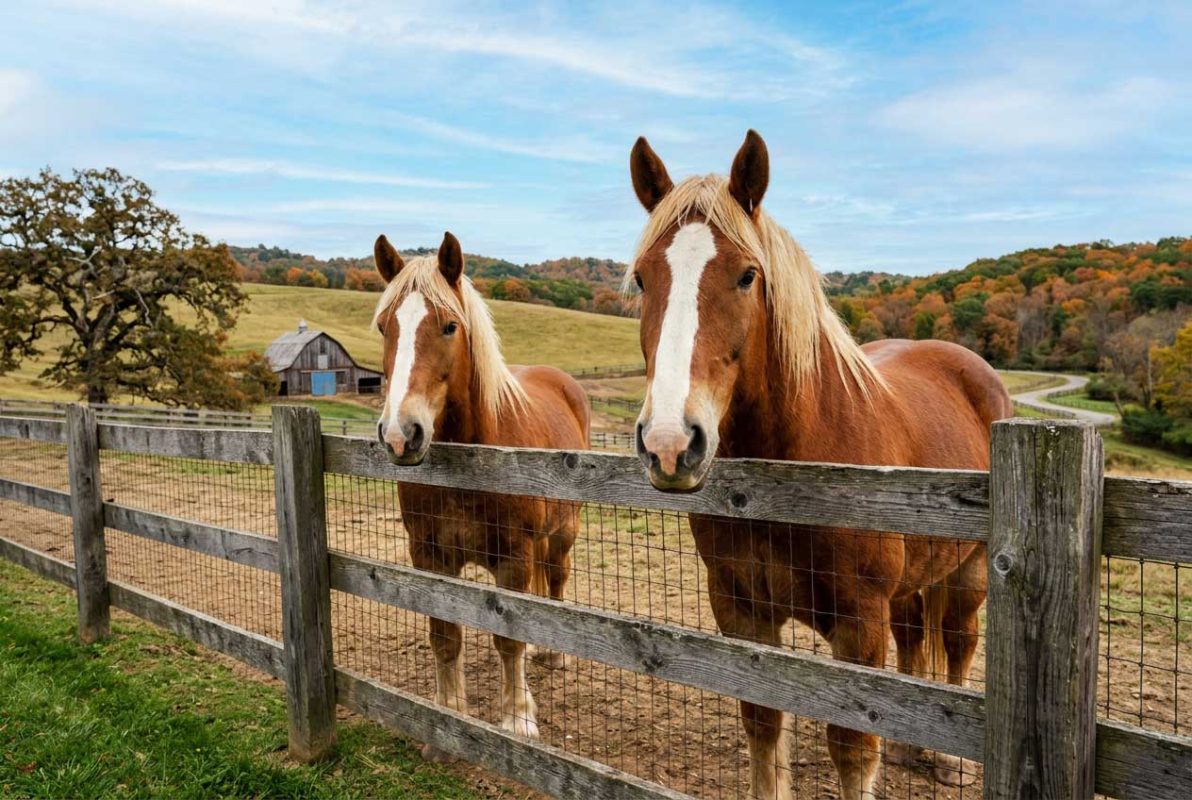
Wooden fencing is a familiar option for horse farms, paddocks, and pasture boundaries. It commonly features timber posts and horizontal rails that create a clearly defined enclosure.
One advantage of wooden fencing is its visibility. The solid rails are easy to see, which can help horses recognize the boundaries of their enclosure. Wood fencing can also be adapted to different property layouts.
However, timber requires regular inspection and maintenance. Weather exposure, moisture, rot, loose fasteners, and damaged boards can affect its condition over time.
Choose suitable materials and ensure rails are securely attached without protruding nails or sharp edges. Inspect posts and connections regularly, replacing damaged components when necessary.
2. Vinyl Fencing
Vinyl fencing is another option for horse properties. It typically features posts and horizontal rails made from durable synthetic material.
Its smooth surface and consistent appearance can make it attractive for farm boundaries and paddock enclosures. Vinyl also does not require the same type of painting or staining associated with many wooden fences.
However, performance depends on product quality, installation, temperature changes, and exposure to weather. Some systems may crack, become brittle, or suffer damage from impact.
Before purchasing vinyl fencing, check the manufacturer’s recommendations for horse use, rail spacing, post installation, and maintenance. Inspect the fence regularly for loose connections, damaged rails, and other potential hazards.
3. Woven Wire Fencing
Woven wire fencing consists of connected wire strands arranged in a mesh pattern. It is used on some farms for pasture boundaries and livestock enclosures.
For horse applications, mesh size, wire tension, fence height, visibility, and installation quality are important considerations. Openings should be designed to reduce the risk of a horse becoming caught by a hoof or leg.
Some woven wire systems may be combined with a clearly visible top rail or other suitable visibility features. The complete system should be selected specifically for the intended animals and environment.
Inspect the wire regularly for broken strands, loose sections, sharp ends, and damaged posts. Avoid fencing configurations that could create entanglement or injury hazards.
4. Electric Fencing
Electric fencing can be used to manage pasture boundaries, divide grazing areas, or create temporary enclosures when an appropriate system is selected and installed correctly.
These systems use an energizer to deliver controlled electrical pulses through suitable conductive fencing components. Their effectiveness depends on correct installation, grounding, vegetation management, and regular testing.
For horses, visibility is particularly important. Use fencing products designed for equine applications and follow the manufacturer’s guidance regarding height, spacing, voltage, and placement.
Electric fencing should not be treated as a substitute for careful supervision or suitable physical boundaries in every situation. Check the system frequently and keep vegetation from interfering with its operation.
5. Pipe and Metal Rail Fencing
Pipe and metal rail fencing may be found on some horse farms, paddocks, and handling areas. These systems can provide a rigid boundary when designed and installed appropriately.
Material strength, rail spacing, joint construction, and surface condition all affect suitability. Metal fencing must be free from sharp edges, protruding bolts, damaged welds, and other hazards.
Consider whether the chosen design provides sufficient visibility and appropriate flexibility for the intended location. Rigid fencing may be unsuitable in certain situations if horses could collide with it or become trapped against its components.
Inspect metal rails and posts regularly for corrosion, loose connections, and structural damage.
What to Consider When Choosing Horse Farm Fencing
Selecting the right fencing system involves more than comparing appearance or purchase price.
Safety and visibility: Choose a design horses can see clearly, with suitable spacing and minimal opportunities for entanglement.
Durability: Consider how the material performs under local weather conditions and expected daily use.
Installation: Ensure posts, rails, gates, and connections are installed securely according to the manufacturer’s recommendations.
Maintenance: Review the inspection, repair, cleaning, and replacement requirements before making a decision.
Farm layout: Account for slopes, drainage, pasture size, access routes, and the location of feeding and watering areas.
Budget: Compare initial installation costs with expected maintenance and replacement expenses over time.
Tips for Maintaining Horse Farm Fencing
Regular inspections help identify potential problems before they become more serious. Walk the fence line and check for leaning posts, broken rails, loose wires, damaged connectors, and gaps near the ground.
Inspect gates and latches to confirm they operate correctly and close securely. Keep vegetation under control where it interferes with visibility or electric fencing performance.
After severe weather, check for fallen branches, displaced posts, and other damage. Repair unsuitable sections promptly and keep tools and construction materials away from horses during maintenance work.
Choose a Reliable Fencing System for Your Horse Farm
The best fencing for a horse farm depends on your property, budget, horse management practices, and maintenance preferences. Wooden, vinyl, woven wire, electric, and metal rail systems each have different features to consider.
By prioritizing visibility, suitable construction, secure installation, and routine inspections, you can choose a fencing system that supports organized pasture management.
Careful planning and consistent maintenance help keep farm boundaries in good condition and make everyday horse care more manageable throughout the year.
