
Horse Barn Maintenance
How to Control Dust and Odors in Horse Barns
Oct
Keeping dust and odors under control is an important part of maintaining a clean and organized horse barn. Hay, bedding, manure, and everyday stable activities can contribute to airborne particles and unpleasant smells. Without regular cleaning and suitable ventilation, these issues can become more noticeable and make barn maintenance more challenging.
Whether you care for horses in a small private stable or manage a larger equestrian facility, a consistent maintenance routine can help keep the environment fresher and more comfortable. By improving airflow, managing bedding, removing waste regularly, and maintaining feeding areas, you can address common sources of dust and odors.
Understand the Main Sources of Barn Dust and Odors
Before choosing a maintenance approach, identify where dust and odors are coming from. Hay and bedding can release particles during handling, storage, and cleaning. Dry soil, accumulated debris, and sweeping can also contribute to airborne dust.
Odors commonly develop when manure, urine, wet bedding, or leftover feed accumulates in enclosed areas. Poor drainage and damp surfaces may make these problems more difficult to manage.
Pay attention to stalls, corners, feeding areas, manure storage locations, and enclosed storage spaces. Identifying the main sources makes it easier to choose practical solutions instead of relying only on air fresheners or surface cleaning.
Improve Ventilation Throughout the Barn
Proper ventilation helps fresh air circulate and allows moisture and airborne contaminants to disperse. Inspect windows, vents, and other ventilation openings regularly to ensure they are not blocked by equipment, hay, or stored supplies.
Where conditions permit, open suitable doors and windows to encourage airflow. Consider the barn layout and weather when deciding how to ventilate different areas.
Fans may help improve air movement when correctly positioned and maintained. However, they should not simply blow dust from bedding or storage areas toward horses or workers. Electrical equipment should be suitable for the environment and installed safely.
If persistent odors remain despite regular cleaning, investigate whether poor airflow, drainage problems, or another underlying issue needs attention.
Choose and Handle Bedding Carefully
Bedding can influence both dust levels and odor management. Different materials have different characteristics, so consider the product’s suitability, storage requirements, absorbency, and dust content before making a selection.
Store bedding in a dry, appropriate location and follow the supplier’s recommendations. Keep storage areas orderly and protect materials from unnecessary moisture and contamination.
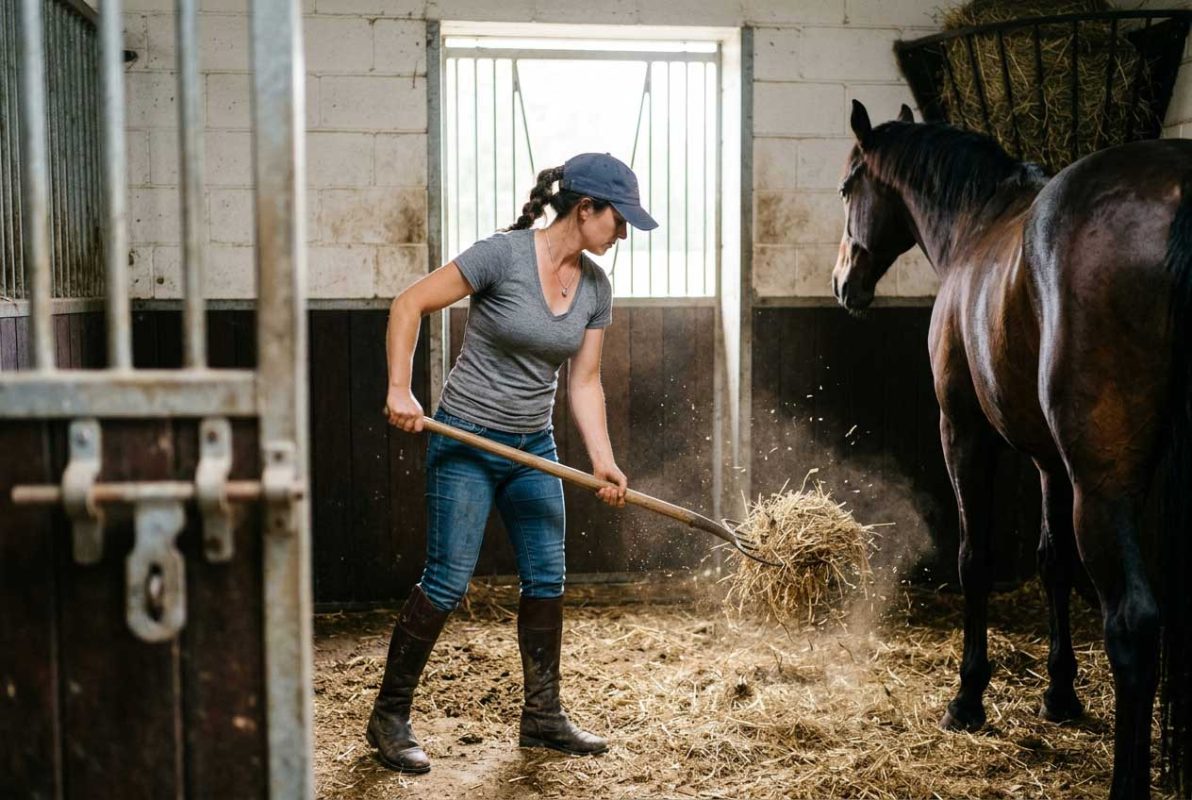
When cleaning stalls, remove manure and wet bedding regularly. Add fresh bedding as needed to maintain a suitable resting surface.
Avoid unnecessary disturbance of dry bedding around horses. Use practical cleaning methods that limit airborne particles, and allow dust to settle before bringing horses back into an affected area when appropriate.
Keep Stalls and Manure Areas Clean
Regular manure removal is one of the most practical ways to manage odors in horse barns. Establish a daily cleaning schedule that suits the number of horses, stall design, and type of bedding used.
Remove manure and saturated bedding, paying attention to corners and areas where waste may accumulate. Clean water and feed containers as needed, and remove leftover feed that could spoil or attract pests.
Store collected manure in a designated area away from stalls, feed storage, and other frequently used spaces. Manage the storage location according to local requirements and site conditions.
Check manure storage areas for drainage issues and excessive moisture. A well-planned waste management routine can make odor control easier throughout the year.
Store Hay and Feed Properly
Hay and feed should be stored in suitable locations that protect them from moisture, pests, and contamination. Damp or spoiled materials may develop unpleasant odors and should be assessed before use.
Keep feed in appropriate, secure containers and follow storage instructions. Clean up spilled feed promptly and check storage areas for signs of pests or water leaks.
Hay should be stored with attention to ventilation and fire safety. Avoid placing large quantities of hay where they obstruct exits or interfere with airflow.
When handling hay, minimize unnecessary shaking or throwing that can release additional particles. If hay appears unusually dusty or moldy, seek appropriate guidance before feeding it to horses.
Manage Dust During Daily Cleaning
Cleaning methods can influence the amount of dust circulating through a barn. Dry sweeping, shaking bedding, and moving stored hay may release particles into the air.
Whenever practical, choose cleaning methods that reduce dust disturbance. Work methodically, avoid unnecessary agitation, and maintain suitable airflow during routine tasks.
Keep aisles and walkways clear of loose bedding, dirt, and debris. Clean grooming areas and equipment storage spaces regularly to prevent dust from accumulating.
If dust remains a persistent problem, review the type of bedding, condition of stored hay, cleaning practices, and ventilation system together rather than changing only one factor.
Monitor Moisture and Drainage
Excess moisture can contribute to unpleasant odors, damp bedding, and difficult cleaning conditions. Check stall floors, water containers, plumbing, and nearby drainage routes regularly.
Repair leaking water equipment promptly and remove standing water where appropriate. Ensure that flooring and drainage systems function as intended and that water does not collect in frequently used areas.
Outdoor paddocks and entrances may also need attention during rainy weather. Managing muddy sections and improving drainage where necessary can help limit the amount of wet dirt tracked into the barn.
Establish a Regular Barn Maintenance Routine
A simple schedule can make dust and odor management more consistent.
Daily: Remove manure and wet bedding, check water containers, clean spills, and inspect stalls for damp areas.
Weekly: Review feed and bedding storage, clean frequently used surfaces, inspect ventilation openings, and check for leaks or drainage problems.
Seasonally: Evaluate airflow, review storage arrangements, inspect fans and other equipment, and address changes caused by weather.
Adjust the schedule to suit your barn’s size, horse population, and local conditions.
Maintain a Fresher and More Organized Horse Barn
Controlling dust and odors in horse barns requires a combination of ventilation, regular stall cleaning, appropriate bedding, proper feed storage, and effective moisture management.
By identifying problem areas and following a consistent maintenance routine, horse owners can keep their facilities cleaner and make everyday stable care more manageable.
Small, regular improvements can make a meaningful difference in barn maintenance. With careful observation and practical cleaning habits, you can maintain a well-organized environment that supports the daily needs of horses and the people who care for them.
